When to Use the Clax Cart Brake on Ramps, Kerbs, and Slopes
September 29, 2026 - Folding trolley

Picture this. You are wheeling a loaded trolley down a slight slope at the market, and it starts rolling faster than you meant it to. Your hand is still on the handle, but for a second, the cart is calling the shots. That is exactly when the Clax Cart brake earns its keep.
Most people only think to use the brake once they need it, and by then it can be too late to stop a wobble from turning into a spill. Knowing when to engage it- before you hit the ramp rather than during it- is what keeps your cart, your goods, and the people around you safe.
Key points:
- The brake is for control on slopes and ramps, not just parking on flat ground.
- Engage it before you start loading or unloading on any incline.
- Kerbs and gutters put extra strain on the wheels, so brake before you cross.
- Good habits, like packing heavy items low and keeping a hand free, work alongside the brake, not instead of it.
Why the Brake Matters on Uneven Ground
A trolley that feels flat and steady on level ground behaves completely differently the moment you introduce a slope. Gravity does the pushing for you, and a loaded cart can pick up speed within a metre or two. On a driveway, a car park ramp, or even the slight tilt of a footpath, that extra weight works against you rather than for you.
This is not about worst-case scenarios. It is about ordinary moments: stepping away for a second to open a car boot, steadying yourself on uneven paving, or turning to grab another box off the shelf. The brake gives you a way to hold the cart in place so your hands are free, and so a small lapse in attention does not turn into a chase down the driveway.
How the Brake Works
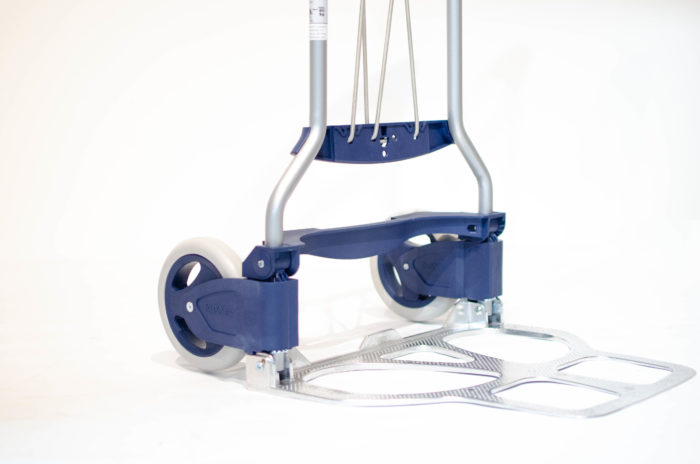
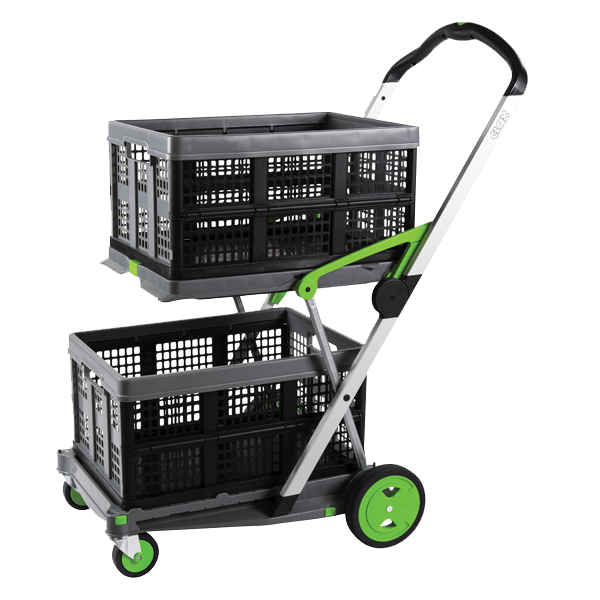
The Clax Cart has a simple foot-operated push-button brake. Step down, and two support feet lower to lock the wheels and hold it steady, even with a full 60kg load across both levels. Step again, and it releases just as easily.
It is designed to be used often, not just when you park the cart at the end of a trip. Because it engages with your foot, you never have to bend down or take your hands off whatever you are carrying to use it.

When to Use the Brake
On Ramps and Loading Areas
Car park ramps, warehouse loading bays, and market access ramps are the most common places a cart gets away from someone. Before you start pushing onto a ramp, or the moment you stop partway up or down, engage the brake. If you need to unload boxes or crates while you are still on the incline, brake first. It only takes a second, and it means the cart will not shift while your attention is on the load.
Crossing Kerbs and Gutters
Kerbs put sudden strain on the wheels, and a loaded cart can tip or roll unexpectedly as it drops off the edge. Slow down before a kerb, and if you need to pause to check your footing or wait for traffic, brake the cart rather than relying on your grip alone. The same goes for gutters and driveway crossovers, where the surface changes quickly under the wheels.
On Slopes and Sloped Driveways
Suburban driveways, sloped footpaths, and uneven yards all count as a slope for a loaded cart, even if they do not look steep. If you are stopping anywhere on an incline, whether to open a gate, answer your phone, or simply catch your breath, brake first. It is a small habit that removes the risk entirely.
Extra Tips for Stability on Uneven Ground
The brake works best alongside a few good habits. Pack heavier items on the bottom level and lighter ones on top, so the cart’s centre of gravity stays low and it is harder to tip. Keep one hand on the handle whenever you are on a slope, even with the brake engaged, so you are ready if the ground shifts under the wheels. And before you walk away, press down until you feel both support feet lock in. A brake that is only half engaged will not hold on an incline. Worn wheels can also stop the brake from gripping properly, so if yours feel loose or worn, it is worth checking the spare parts range for a replacement.
Confidence on Any Ground
Ramps, kerbs, and slopes do not have to be a source of stress when you are moving your cart around home, work, or the markets. Use the brake as a habit rather than a last resort, and it will become second nature well before you need it in a hurry.
Explore the full Clax Cart range to find the setup that suits how you carry.
Frequently asked questions
1. Does the brake work on all surfaces?
Yes. The support feet are designed to hold the cart steady on concrete, asphalt, pavers, and gravel. On very soft or loose ground, use extra caution and avoid leaving the cart unattended for long periods.
2. Can I leave the cart braked and unattended?
For short stops, yes, as long as the brake is fully engaged and the ground is reasonably firm. For longer breaks, it is safer to move the cart to level ground first.
3. Does the brake stop the cart from tipping as well as rolling?
The brake locks the wheels in place, which prevents rolling. Tipping is best managed separately, by loading heavier items low and keeping the load balanced across both levels.
4. How do I know the brake is fully engaged?
You will feel the support feet click down, and the cart will stop moving when you give it a gentle push. If it still shifts underfoot, press the pedal again to make sure it is fully down.
5. Is the brake enough on steep slopes?
The brake is built for everyday slopes like driveways, ramps, and kerbs. On genuinely steep gradients, keep a firm grip on the handle at all times and avoid leaving the cart unattended, brake engaged or not.